
When you design a premium residential living space, selecting permanent furniture involves a major financial commitment that directly impacts daily comfort. Exploring options for where to buy handmade woodwork online reveals sharp pricing differences between assembly-line items and pieces built by individual craftsmen.
This guide breaks down the structural mechanics, material realities, and long-term financial calculations behind these premium items to show you how to spend your interior budget wisely. Discovering professional “custom woodworking services near me” can help you determine whether the initial upfront expense yields a genuine financial return over time.
Solid Hardwood is Naturally More Durable and Harder to Process
Direct material evaluations confirm that premium solid timber outlasts industrial wood substitutes under everyday home conditions.
Factory furniture relies on compressed particleboard or fiberboard wrapped in thin synthetic veneers that suffer immediate structural failure when exposed to physical impacts. Solid lumber resists mechanical breakdown because its natural fiber density absorbs physical stress without cracking or splitting apart.
According to the condition assessment manual published by the USDA Forest Service, visual inspections and ultrasound testing confirm that natural wood grain maintains its load-bearing performance over time.
Craftsmen select wood species like oak, walnut, maple, cherry, bloodwood, and padauk specifically for their cell densities and defensive rings. Processing these heavy logs requires specialized milling machinery, vast workshop space, and extended thermal drying windows.
Factory lines cut costs by skipping these steps, selecting pulp and chemical binders that lack real structural durability. Handcrafted wood processing ensures that every slab maintains its structural alignment before assembly even begins.
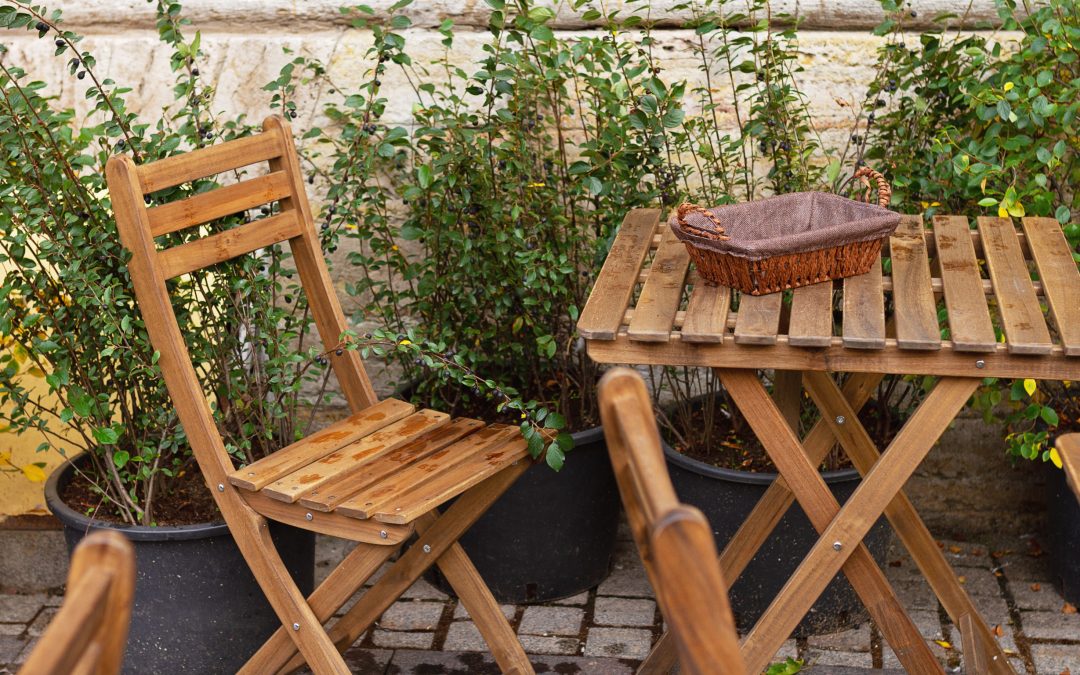
Managing internal timber moisture remains a demanding phase that factory production environments cannot match. Craftsmen must stabilize raw lumber to precise regional moisture percentages to prevent natural warping, twisting, or checking after final assembly. For instance, when designing high-exposure furniture such as custom wood outdoor tables, selecting weather-resistant solid hardwoods ensures that the structural integrity remains completely intact.
A study by the Institute for Health in the Built Environment notes that moisture exposure directly alters microbial communities and organic emissions on timber surfaces, validating the need for scientific wood seasoning and protective sealing.
| Material Type | Structural Composition | Moisture Performance | Repair Capability |
| Solid Hardwood | Natural wood fibers with continuous ring growth | Handles humidity shifts when correctly stabilized by craftsmen | Can be sanded down, filled, and fully re-coated over decades |
| Industrial Composite | Glued wood chips, sawdust, and chemical binders | Expands, delaminates, and rots upon direct liquid contact | Irreparable once the outer laminate layer shears away |
Long-term market evaluations demonstrate an expanding consumer preference for authentic materials that cause no harm to natural habitats during production. Research documented by the Forest Stewardship Council confirms that certified sustainable management practices contribute directly to maintaining forest cover across diverse economic regions.
Selecting certified natural hardwood products guarantees a clean indoor environment while securing an object that physically resists mechanical wear. These durable materials avoid the rapid degradation cycles that characterize cheap composite furniture items built with heavy industrial adhesives.
Precision Building Methods Require Specialized Technical Skill
Interlocking mechanical joints determine the lifetime stability of handcrafted timber furniture far beyond common industrial assembly methods.
Industrial factory lines utilize rapid metal staples and chemical glues to bind panels together in a few minutes. These automated joints fail under standard structural loads because they cannot accommodate the natural expansion and contraction of wood cells. Artisan building instead relies on traditional interlocking connections like mortise-and-tenon or dovetail joints that physically lock wood members into a single unit.
Mastering these building methods requires years of dedicated trade practice that automated assembly machinery cannot replace. A builder must analyze individual boards of walnut, cherry, or zebrawood to match grain orientation and color consistency across the entire face of a tabletop. Homeowners seeking these high construction standards often search out “custom woodworking services near me” to collaborate directly with an experienced artisan. This specialized attention ensures that the selected timber matches the aesthetic and functional needs of the local residential environment.
- Grain Orientation Alignment: Matching annual growth rings to counteract natural timber cupping and bowing during seasonal weather shifts.
- Interlocking Joinery Application: Fabricating physical interlocking structures that distribute weight across the wood itself without relying on metal fasteners.
- Surface Hand-Tooling: Finishing the outer layers to eliminate factory machining marks and establish an even plane.
- Adhesive Pressure Regulation: Applying structural resins under calibrated clamp conditions to achieve a permanent bond.
Bypassing automated assembly lines allows independent craftsmen to spend hours verifying the perfection of a single joint. This slow manual production pace restricts workshop volume but yields an item of exceptional quality.
Handcrafted Items Can Be Safely Refinished and Restored Over Time
Solid wood furniture provides a restorable physical surface that completely eliminates the built-in expiration dates of veneer products. A standard mass-market dining table or coffee table coated in thin paper veneer becomes useless the moment its decorative face wears away to expose the underlying glue boards. Handmade solid wood items can be sanded down, re-stained, and sealed repeatedly over a multi-generational lifespan. This restoration capability means an artisan piece acts as a preserved asset rather than an immediate household expense.
The physical structure of hardwood allows it to adapt to changing interior styles through simple surface modifications. Homeowners can strip away an old finish and apply modern protective oils to completely alter the appearance of a solid oak or walnut piece.
When researching where to buy handmade woodwork online, prioritizing shops that detail their raw timber preparation ensures you receive a structurally stable item. This material flexibility explains why vintage artisan furniture items routinely maintain high valuations on the secondary market.
| Lifecycle Attribute | Mass-Market Factory Furniture | Handcrafted Solid Wood Furniture |
| Initial Purchase Price | Low initial financial outlay | Higher initial capital expenditure |
| Average Useful Lifespan | 3 to 5 years before failure | 50 to 100+ years with basic care |
| Replacement Frequency | Requires multiple purchases over 40 years | Single initial purchase lasts the entire period |
| Long-Term Financial Cost | High due to cumulative replacement fees | Low because asset value is preserved |
Unbiased cost evaluations confirm that buying cheap items repeatedly accumulates more financial waste than investing once in solid timber. Long-term trends tracked in the Intel Market Research luxury sector report show that high-end consumer decisions focus heavily on item durability to meet residential expectations.
Selecting furniture that can be physically repaired keeps consumer capital secure within the household. This durability prevents useful materials from ending up in local landfills prematurely, supporting a sustainable home economy.
How to Identify Areas in Your Home That Require Artisan Quality
Targeting high-traffic household spaces for premium furniture procurement optimizes your overall residential asset lifecycle expenses. Every room in a house presents different levels of physical wear and environmental stress on your furniture assets.
Spending premium capital on secondary guest bedroom accent tables or temporary shelving units often represents an inefficient allocation of your design budget. High-traffic zones require high-density hardwoods like padauk or bloodwood to withstand constant mechanical impact, liquid spills, and shifting humidity levels.
Main dining rooms, kitchen areas, and family entryways represent the primary functional spaces that justify artisan assembly methods. These surfaces experience daily knife impacts, heavy ceramic placements, and frequent cleaning with household liquids that rapidly dissolve cheap factory laminates.
For exterior residential spaces, buying custom wood outdoor tables prevents common weather damage like rot, joint warping, and splitting caused by intense humidity fluctuations. Working with professional builders through “custom woodworking services near me” allows you to specify exact lumber thicknesses that match these severe environmental demands.
- Primary Dining Tables: These surfaces bear heavy daily weight, experience direct hot or cold dish placements, and require chemical-free finishes for food safety.
- Kitchen Work Surfaces: High-moisture areas subject to frequent washing require tight wood grain structures to repel liquid absorption and bacteria.
- Outdoor Entertaining Furniture: High-exposure environments require solid timbers that handle ultraviolet radiation and heavy seasonal downpours without splitting.
- Heavy-Use Workspace Desks: Areas supporting continuous equipment weight require rigid structural joinery to prevent sagging and frame rocking over time.
Tailoring your furniture choices to these specific operational demands ensures your home remains functional without constant maintenance headaches. Commissioning an object from a skilled workshop guarantees that the physical piece fits the spatial constraints of your room precisely. This tailored approach creates an optimized layout that improves room utility while maximizing the aesthetic impact of natural timber grain.
Ultimately, matching artisan quality to your highest-use spaces provides the best protection for your long-term real estate investments.
Conclusion
Bespoke solid wood items represent a calculated financial choice that protects your household budget by ending the continuous cycle of cheap consumer replacements. Evaluating your furniture purchases based on material density, joinery durability, and long-term repair capability reveals why handmade pieces command a higher market price.
When deciding where to buy handmade woodwork online, focusing on authentic joinery and stable wood species guarantees a lifetime of daily utility. Investing in premium custom wood outdoor tables or indoor centerpieces ensures your home is anchored by reliable, functional art that holds its value for generations.